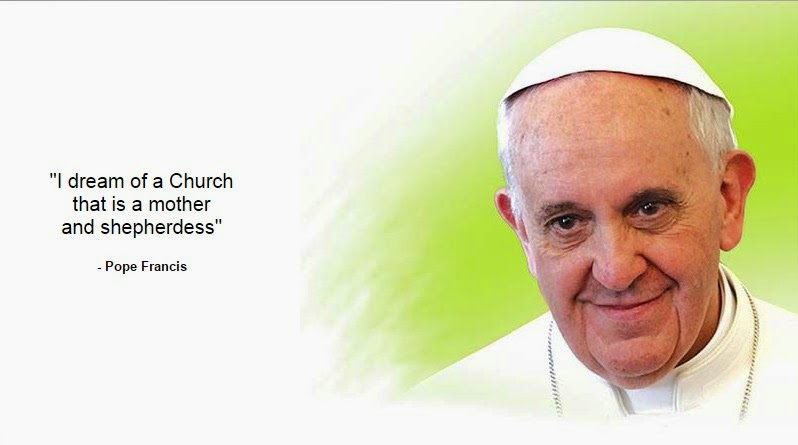
Pope Francis stood for world peace

Cardijn Community International convenor, MJ Ruben has issued the following statement mourning the death and celebrating the legacy of Pope Francis:

Cardijn Community International (CCI) expresses its deep sorrow and shock at the death of Pope Francis today.

Pope Francis was the first non European Pope in 1300 years. He was the first Latin American and first Jesuit Pope.

He stood for social justice, reforms in the Church, came out with strong comments on many traditions of the structural Church, was a champion of Ecological Education and more importantly stood for world peace.

Pope Francis tried his best to make the Church, a Church of the Poor.

CCI looks forward to the continuation of the reforms and dreams of Pope Francis and hopes for a suitable choice in the next few days guided by the Holy Spirit.

Rest in eternal peace Papa Francis! You have done enough!

Popular movements bid farewell to Francis

The Political Committee of the World Meeting of Popular Movements organisation, which includes the World Movement of Christian Workers, has issued a statement mourning the death of Pope Francis.

“With deep sorrow and immense gratitude, the popular movements of the world bid farewell to our brother Francis —pope, pastor, and prophet— who walked with those discarded by history and taught us that it is not enough to survive: we must live with dignity,” the statement begins.

It continues:

Our beloved Pope Francis was not a distant ally, but a companion on the journey. From the fi rst World Meeting in 2014 to his fi nal message, he saw in the most humble and rightless workers, in those without land, shelter, or work, a transformative force, a living hope, a seed of fraternity and friendship capable of building a truly inhabitable world. He gave us a voice, recognized us as “social poets”, and entrusted us with a mission that we must now honor with even greater commitment.

He walked alongside us and taught us that land, housing, and work are sacred rights—and that fi ghting for them is not populism nor ideology: it is Gospel and it is social justice. He reminded us that Christian faith —and indeed any human conscience— cannot silence the cry of the suff ering people or make peace with the culture of discard. His magisterium was tenderness with courage, denunciation with compassion, politics with love.

He gave us trust and also a mandate: “You are not insignifi cant; you are at the forefront”. He warned us against the logic of individualism, corruption, and war. He denounced the power that kneels before money instead of justice. He called on us to care for our common home, to confront structures of sin with the face of the people building the common good, to dream together, and to leave no one behind.

Today, Francis departs, but he does not leave us. He remains in our struggles, in our assemblies, in every workplace, in every community kitchen, in every urban garden, in every neighborhood, in every act of resistance and every work of solidarity. His faith became concrete hope. His word became community. His heart, a home for all peoples.

In the name of the excluded who embraced him as their own, in the name of those who continue to believe in the power of tenderness and in the power of a collective “we!, we say: Thank you, Francis. Thank you, brother. May your memory sustain us, may your example guide us, and may your legacy live on in every struggle for human dignity everywhere.

Signed by

Landless Workers’ Movement (MST) Brazil | Union of Workers of the Popular Economy (UTEP) Argentina | Slum Dwellers International (SDI) | World Movement of Christian Workers (WMCW) | PICO Network United States | Mediterranea Saving Humans (MSH) and Spin Time Italy.

An initiative of Pope Francis, the World Meeting of Popular Movements’ (WMPM) purpose is to create an “encounter” between Church leadership and grassroots organizations working to address the “economy of exclusion and inequality” (Joy of the Gospel, nos. 53-54) by working for structural changes that promote social, economic and racial justice.

SOURCE

Statement from the Political Committee of the World Meetings of Popular Movements on the Death of Pope Francis

Christian Worker movement condemns growing inequality

The appropriation of half of the world’s wealth by 1% of the global population creates inequalities that harm the poorest, the World Movement of Christian Workers says in a statement for 1 May.

The statement says:

Since 1890, May Day has been known as a day to demonstrate and demand workers’ rights. It is also a day to celebrate the gains and achievements of the working class. On this occasion, the World Movement of Christian Workers invites its members to join with other workers around the world to “always call attention to the dignity and rights of those who work, to condemn situations in which this dignity and these rights are violated, and to help bring about changes that will ensure authentic progress for man and society” (Pope John Paul II, Encyclical Laborem Exercens). In 2025, the call is made through this message written by the Reunion Island Movement.

The dignity of eating the fruit of our labour

At a time when our world is facing significant geopolitical upheavals, the few beneficiaries of the capitalist mode of production will do everything to protect themselves. The lives and dignity of working-class men and women will continue to deteriorate as they are viewed as tools that can be discarded to save money.

In Réunion Island, after the Covid crisis, the government significantly increased the number of subsidised contracts (jobs partially funded by the State). At the same time, there was a development of micro-enterprises. As a result, in 2022, the unemployment rate (according to the ILO definition) in Réunion reached a historically “low” level of 18.1%… compared to 7.3% in mainland France! Despite these improvements, the unemployment rate remains very high in Réunion, with a frightening rate of 41.9% among young people aged 15 to 24 (source: insee.fr). Given the current economic situation and political orientations, the number of unemployed individuals will certainly increase again, as the wage bill is the preferred adjustment variable to balance public accounts.

The appropriation of half of the world’s wealth by 1% of the global population creates inequalities that harm the poorest. According to experts, this economic violence is no accident; it is the current functioning of our society. 

This is evident in Réunion, where an international group, present in several sectors, holds 37% market share, representing 45% of everyday consumer spending (source: Observatoire des Prix, des Marges et des Revenus de La Réunion). In such a situation, how can we hope for a real decrease in inflation? Just look at the increase in the price of water bottles when a cyclone ravaged the island in March of this year. 

Added to this are wage inequalities between men and women and salaries below the national average for an equivalent level of education. We then understand the young Réunionese who go abroad to study and do not wish to return to work in their homeland.

So why protest on May 1st, some ask? The small feel they will always remain small, their hopes for a better tomorrow diminish. Why go to the streets if we are not listened to? Is it worth it? 

YES, we must, as active citizens, be present in the streets to show our disagreement with an economic system that harms workers. We must show solidarity with those whose end of the month is increasingly difficult.

Artificial intelligence, presented as a major technological evolution, serves a global economy that upends our lives at a dizzying speed. 

Instead, let us develop our natural intelligence to put it in the service of workers’ dignity.

As Christians, as baptised individuals, we must support the defense of the smallest, those who suffer from injustices, inequalities, and discrimination. We must support the right to dignity and decent work for everyone, in love and solidarity… a true program for life. 

May 1st is also the feast of Saint Joseph, the worker, craftsman, and a symbol of dignity according to the Pope. Let us pray to him so that every worker may find or rediscover “the value, dignity, and joy of what it means to eat bread that is the fruit of their labour… And that we find paths that lead us to say: no young person, no individual, no family without work,” as Pope Francis said.

SOURCE

Message from the WMCW on the occasion of the International Labour Day on May 1st, 2025 (WMCW)

Good Samaritan models true ‘ordo amoris’: Pope Francis

Pope Francis has written to the bishops of the USA in the wake of controversial comments by US Vice-President JD Vance, a Catholic convert, to clarify Gospel teaching on human dignity and migration.

“The journey from slavery to freedom that the People of Israel traveled, as narrated in the Book of Exodus, invites us to look at the reality of our time, so clearly marked by the phenomenon of migration, as a decisive moment in history to reaffirm not only our faith in a God who is always close, incarnate, migrant and refugee, but also the infinite and transcendent dignity of every human person,” Pope Francis wrote.

“These words are not an artificial construct,” he emphasised. “Even a cursory examination of the Church’s social doctrine emphatically shows that Jesus Christ is the true Emmanuel (cf. Mt 1:23); he did not live apart from the difficult experience of being expelled from his own land because of an imminent risk to his life, and from the experience of having to take refuge in a society and a culture foreign to his own. “The Son of God, in becoming man, also chose to live the drama of immigration.”

Francis was responding to Vice-President Vance’s comment on X claiming that Christian teaching on love applies to people in concentric circles of love

The pope continued:

I like to recall, among other things, the words with which Pope Pius XII began his Apostolic Constitution on the Care of Migrants, which is considered the “Magna Carta” of the Church’s thinking on migration:

“The family of Nazareth in exile, Jesus, Mary and Joseph, emigrants in Egypt and refugees there to escape the wrath of an ungodly king, are the model, the example and the consolation of emigrants and pilgrims of every age and country, of all refugees of every condition who, beset by persecution or necessity, are forced to leave their homeland, beloved family and dear friends for foreign lands.”

Likewise, Jesus Christ, loving everyone with a universal love, educates us in the permanent recognition of the dignity of every human being, without exception. In fact, when we speak of “infinite and transcendent dignity,” we wish to emphasize that the most decisive value possessed by the human person surpasses and sustains every other juridical consideration that can be made to regulate life in society. Thus, all the Christian faithful and people of good will are called upon to consider the legitimacy of norms and public policies in the light of the dignity of the person and his or her fundamental rights, not vice versa.

I have followed closely the major crisis that is taking place in the United States with the initiation of a program of mass deportations. The rightly formed conscience cannot fail to make a critical judgment and express its disagreement with any measure that tacitly or explicitly identifies the illegal status of some migrants with criminality. At the same time, one must recognize the right of a nation to defend itself and keep communities safe from those who have committed violent or serious crimes while in the country or prior to arrival. That said, the act of deporting people who in many cases have left their own land for reasons of extreme poverty, insecurity, exploitation, persecution or serious deterioration of the environment, damages the dignity of many men and women, and of entire families, and places them in a state of particular vulnerability and defenselessness.

This is not a minor issue: an authentic rule of law is verified precisely in the dignified treatment that all people deserve, especially the poorest and most marginalized. The true common good is promoted when society and government, with creativity and strict respect for the rights of all — as I have affirmed on numerous occasions — welcomes, protects, promotes and integrates the most fragile, unprotected and vulnerable. This does not impede the development of a policy that regulates orderly and legal migration. However, this development cannot come about through the privilege of some and the sacrifice of others. What is built on the basis of force, and not on the truth about the equal dignity of every human being, begins badly and will end badly.

Christians know very well that it is only by affirming the infinite dignity of all that our own identity as persons and as communities reaches its maturity. Christian love is not a concentric expansion of interests that little by little extend to other persons and groups. In other words: the human person is not a mere individual, relatively expansive, with some philanthropic feelings! The human person is a subject with dignity who, through the constitutive relationship with all, especially with the poorest, can gradually mature in his identity and vocation. The true ordo amoris that must be promoted is that which we discover by meditating constantly on the parable of the “Good Samaritan” (cf. Lk 10:25-37), that is, by meditating on the love that builds a fraternity open to all, without exception.

But worrying about personal, community or national identity, apart from these considerations, easily introduces an ideological criterion that distorts social life and imposes the will of the strongest as the criterion of truth.

    In conclusion, Pope Francis praised the US bishops for their work “for the protection and defense of those who are considered less valuable, less important or less human” and encouraged Catholics and all men and women of good will “not to give in to narratives that discriminate against and cause unnecessary suffering to our migrant and refugee brothers and sisters.”

    “With charity and clarity we are all called to live in solidarity and fraternity, to build bridges that bring us ever closer together, to avoid walls of ignominy and to learn to give our lives as Jesus Christ gave his for the salvation of all,” Pope Francis wrote.

    READ MORE

    Pope Francis to Bishops of the USA (Vatican)

    PHOTO

    Vatican Media

    Pope Francis reflects on review of life and see-judge-act

    Pope Francis met with leaders of the French Specialised Catholic Action movements on 13 January 2022, delivering an important speech in which he reaffirmed the value of the Cardijn see-judge-act and review of life methodology.

    Here is his speech:

    I greet you all with affection and I thank Archbishop Fonlupt for his kind words. It is a joy for me to receive you on the occasion of your pilgrimage to Rome. Through you, I would also like to greet all the members of the Catholic Action teams in France, and I ask you to assure them of my prayers and my closeness.

    It is an old habit for your movements to come and meet the Pope. As early as 1929, my predecessor Pius XI received representatives of Catholic Action and hailed “the renewal and continuation of what was in the first days of Christianity, for the proclamation of the Kingdom of God, (… ) in the cooperation of the laity with the Apostles” in the movement (Audience of June 12, 1929). You have rightly chosen the theme: “Apostles today” for your pilgrimage. I would like to reflect with you on our call to effectively become apostles today, on the basis of the insight given to you by one of the great figures of Catholic Action, Father Cardijn, namely the “review of life”.

    When the disciples walked with Jesus on the road to Emmaus (cf. Lk: 2418-35), they began by remembering the events they had experienced; then they discerned the presence of God in those events; finally, they acted by setting out again to announce the Resurrection of Christ in Jerusalem. See, judge, act: you know these three words well! Let’s take them together.

    See. This first stage is essential. It consists in stopping to look at the events that make up our life, which constitute our history as well as our family, cultural and Christian roots. The pedagogy of Catholic Action always begins with a moment of memory, in the strongest sense of the term: an anamnesis, that is to say the fact of understanding with hindsight the meaning of what one is and what was experienced, and to perceive how God was present at every moment.

    The fineness and delicacy of the action of the Lord in our lives sometimes prevents us from understanding it at the time, and it takes this distance to grasp its coherence. In the encyclical Fratelli tutti, which your teams have studied, I begin with an inventory of the sometimes worrying situation in our world. It may seem a bit pessimistic, but it is necessary to move forward: “One never progresses without memory, one does not evolve without a complete and luminous memory” (Fratelli tutti, n. 249).

    The second step is to judge or, one might say, to discern. This is the moment when we allow ourselves to be questioned and challenged. The key to this stage is recourse to Holy Scripture. It is a matter of allowing our lives to be challenged by the Word of God which, as the Epistle to the Hebrews says, is “living, energetic and sharper than a two-edged sword (…); it judges the intentions and thoughts of the heart” (4:12).

    In Fratelli tutti, I chose the parable of the Good Samaritan to question our relationship to the world, to others, and in particular to the poorest. In the encounter between, on the one hand, the events of the world and of our life, and on the other hand, the Word of God, we can discern the Lord’s calls to us.

    Through their history, our Catholic Action movements have developed genuine synodal practices, especially in team life which forms the basis of your experience. Our Church has also embarked entirely on a synodal journey, and I am counting on your contribution. Let us remember precisely that synodality is not a simple discussion. It is not an “adjective”. One should never turn the substantiality of life into an adjective.

    Synodality is not even the search for majority consensus, that is what a parliament does, as is done in politics. It is not a plan, a program to put in place. No, it is a style to adopt in which the first protagonist is the Holy Spirit who expresses himself first and foremost in the Word of God, read, meditated on and shared together.

    Let’s take the concrete image of the cross: it has a vertical arm and a horizontal arm. The horizontal arm is our life, our history, our humanity. The vertical arm is the Lord who comes to visit us through his Word and his Spirit, to give meaning to what we live. To be fixed on the cross of Jesus, as Saint Paul says (cf. Gal 2, 19), is to really accept to put my life under his gaze, to accept this encounter between my poor humanity and his transforming divinity. Please always leave an important place for the Word of God in the life of your teams. Also give a place to prayer, to interiority, to adoration.

    We come to our third step: act. The Gospel teaches us that the action, which is in the very name of your movement, should always come from God’s initiative. Saint Mark reports that after the resurrection “the Lord worked with [the Apostles] and confirmed the Word by the signs which accompanied it” (16, 20). Thus, “action belongs to the Lord: it is he who has exclusive rights to it, walking “incognito” in the history we inhabit” (Speech of April 30, 2021 to the members of Italian Catholic Action).

    Our role therefore consists in supporting and encouraging the action of God in hearts, by adapting to the reality which is constantly evolving. The people – and I am thinking more particularly of young people – whom your movements reach are not the same as a few years ago. Today, especially in Europe, those who frequent Christian movements are more sceptical of institutions, they seek less binding and more ephemeral relationships.

    They are more sensitive to affectivity, and therefore more vulnerable, more fragile than their elders, less rooted in faith, but just as much in search of meaning, truth, and no less generous. It is your mission, as Catholic Action, to join them as they are, to enable them to grow in the love of Christ and neighbour, and to lead them to more concrete commitment so that they become the protagonists of their own lives and the life of the Church, so that the world will be able to change.

    Thank you, dear friends, thank you from the bottom of my heart for your generous service, which the Church needs more than ever, at this time when I so much hope that everyone will find or rediscover the joy of knowing the friendship of Christ and of announcing the Gospel. Asking you to include me in your prayers, I entrust you, those in charge, as well as all the members of your teams, to the intercession of the Virgin Mary, and I give you the Blessing.

    READ MORE

    Pope Francis: Be effective Apostles rooted in the Word of God (Vatican News)

    Pope Francis, Speech to leaders of Catholic Action movements in France (Joseph Cardijn Digital Library)

    Pope Francis approves Rutilio Grande and lay martyrs beatification

    Pope Francis has recognized the martyrdom of the Servants of God Rutilio Grande García, a Jesuit priest, and his 2 lay companions, who were killed in hatred of the faith in El Salvador on March 12, 1977, Vatican News reports.

    Murdered before the start of the Salvadoran civil war, Father Grande, who was a close friend of fellow Salvadoran and martyr, Saint Oscar Romero.

    Known for his vigorous defence of poor, Fr Grande died on 12 March, 1977, near his hometown of El Paisnal in rural El Salvador after being shot a dozen times or more along with elderly parishioner Manuel Solorzano and teenager Nelson Rutilio Lemus, who were accompanying him to a novena for the feast of St Joseph, Crux says.

    The horror that the assassination of Fr Grande generated led Archbishop Oscar Romero of San Salvador to take up the Jesuit’s mantle as a defender of the poor leading to his own martyrdom three years later.

    Prior to beginning his community organising work, Fr Rutilio had studied at the Lumen Vitae Institute in Brussels, where he learned the Cardijn see-judge-act method.

    SOURCES

    Martyrdom of Grande (Vatican News)

    Pope clears way for beatification of Salvadoran Jesuit, companions (Crux)

    Padre Rutilio Grande S.J. (Facebook)

    Rutilio Grande: The Cardijn priest who ‘converted’ Archbishop Romero (Cardijn Research)

    Blessed Oscar Romero and the See Judge Act (Cardijn Research)

    Pope Francis greets CCI, ICYCW and IYCW

    Through his communication of the 17th October 2017, Cardinal Secretary of State Pietro Parolin conveys the message of Pope Francis to ICYCW, IYCW and CCI.

    In this message, Pope Francis appreciates the devoted sentiments that prompted us to write to him about the important work of those young people who continue to be inspired by the work of Joseph Cardinal Cardijn.

    The Secretary of State conveys that the ‘Holy Father wishes to renew his prayerful wishes to the young people the three organisations represent and that he invokes upon all of us God’s blessings of joy and peace’.

    Pope Francis’s message is in response to a joint statement made by CCI, ICYCW and IYCW on the occasion of the 60th anniversary of IYCW Rome Pilgrimage 1957.

    In the joint statement, while recalling the current situation of the young workers around the world, we had stated that Cardijn always insisted on the importance of the vocation and mission of each young worker in his or her daily life.

    We had also mentioned that we believe that this message is particularly relevant and important in the light of next year’s Synod focusing on Young People, the Faith and Vocational.

    Cardijn Community International thanks IYCW and ICYCW for their willingness in joining the efforts of CCI to issue the joint statement.

    Let us continue to promote Cardijn’s spirituality, vision and methodology.

    Pope Francis announces Synod on young people

    P

    Young women workers doing vocational training/S. Moumtzis, USAID/Pixnio

    ope Francis has announced that the next Synod of Bishops will be held in October 2018 on the theme “Young people, faith and vocational discernment,” the Vatican Press Office reports.

    “The theme, an expression of the pastoral care of the Church for the young, is consistent with the results of the recent Synod assemblies on the family and with the content of the post-Synodal apostolic exhortationAmoris Laetitia,” the Vatican announcement continues.

    “Its aim is to accompany the young on their existential journey to maturity so that, through a process of discernment, they discover their plan for life and realise it with joy, opening up to the encounter with God and with human beings, and actively participating in the edification of the Church and of society.”

    Greg Burke, the director of the Vatican press office, told reporters in a short briefing Thursday that the discussions are expected to focus on more than the choice between religious and married life, the National Catholic Reporter notes.

    This should not be taken to mean that the next Synod will discuss the question of whether married men could be ordained to celebrate the sacraments, as the English speaking world had assumed in recent months, Vatican Insider adds.

    Commenting on Twitter, Archbishop Mark Coleridge of Brisbane, Australia, noted that “yet again @Pontifex has chosen a Synod theme which looks to the deeper question of the engagement of faith & culture central to Vatican II.”

    In a Facebook post, Philip Callaghan, president of the English and Welsh Young Christian Workers movement, said that the Synod should also address work and unemployment issues.

    “As Pope Francis has stated, one of the gravest evils facing our society is the unemployment of the young,” Callaghan said. “Work is of fundamental importance to the development of the human person and it is therefore critical that issues surrounding world of work are included in the wider discussions surrounding young people and their place in the Church.”

    SOURCE

    Pope Francis’ special blessing for the IYCW World Council

    Pope Francis has asked former IYCW chaplain, Dom Reginaldo Andrietta, who is now the bishop of Jales in Brazil, to communicate a special blessing to the IYCW World Council which will begin in Aachen, Germany this weekend.

    “I told (Pope Francis) about my responsibility as a diocesan bishop as the reference bishop for pastoral work for the CNBB (Catholic Bishops Conference of Brazil), which includes support for the Young Christian Worker (YCW/JOC) movement, as well as the World Council of the IYCW, which will take place in Germany from 26 September until the 8 October 2016,” Dom Reginaldo wrote in a Facebook post.

    “The pope also communicated to me a special blessing for the IYCW Council where I will be present, and has also sent a letter via the Vatican Secretariat of State expressing its pleasure at this world meeting as well as its encouragement to all participants and their mission in the YCW.”

    Registrations open for Vatican 2+50 Conference, Chennai

    Registrations are now open for the CCI Vatican 2 + 50 Conference to be held in Chennai, India from 5-8 December 2015. The theme of the conference is: “Vatican 2+50: A Cardijn Perspective”.

    Saint John XXIII convened the Second Vatican Council in October 1962 which concluded during the Papacy of Blessed Paul VI on the 5th December 1965. This Ecumenical Council was responsible for steering the Church successfully through the turbulent years after World War II and guided its growing role in the modern world.

    In February 1965, Blessed Paul VI appointed Cardijn a Cardinal and Archbishop, enabling him to take part in the Fourth Session of Vatican II as a Council Father. Cardijn was initially a member of the Preparatory Commission on Lay Apostolate and later an expert in the Conciliar Commission at Vatican II.

    Cardinal Cardijn made 3 speeches at the Vatican II on ‘Religious Freedom’, ‘Young People and the Developing World’ and ‘The World of Work’.

    At a conference in Manila, The Philippines in October 2012, Cardijn Community International (CCI) launched a 3 year project with the theme “Vatican 2+50: A Cardijn Perspective” to re-examine the spirit and decisions of Vatican II in the areas of ‘social teachings of the Church and lay participation’.

    This International Conference is to commemorate the 50th anniversary of the conclusion of Vatican II. Representatives from different countries, international organisations and Church leaders are expected to attend this mega event.

    The Cardijn Community International (CCI) is a movement of people working for sustainable development. CCI promotes Cardijn’s spirituality, vision and SEE-JUDGE-ACT methodology.

    The 50th anniversary of the Second Vatican Council instils a new hope in us with Pope Francis exclaiming ‘Oh, how I would like a poor Church and for the poor’.

    More info:

    http://www.cyours.com/cci/index.html

    Online Registration:

    http://www.cyours.com/cci/registration.aspx