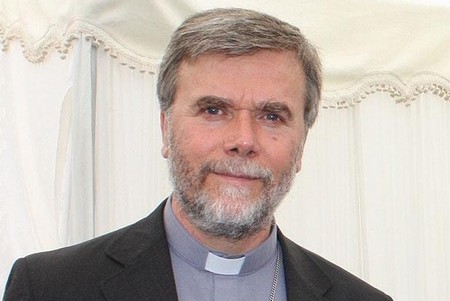
Pope Francis reflects on review of life and see-judge-act

Pope Francis met with leaders of the French Specialised Catholic Action movements on 13 January 2022, delivering an important speech in which he reaffirmed the value of the Cardijn see-judge-act and review of life methodology.

Here is his speech:

I greet you all with affection and I thank Archbishop Fonlupt for his kind words. It is a joy for me to receive you on the occasion of your pilgrimage to Rome. Through you, I would also like to greet all the members of the Catholic Action teams in France, and I ask you to assure them of my prayers and my closeness.

It is an old habit for your movements to come and meet the Pope. As early as 1929, my predecessor Pius XI received representatives of Catholic Action and hailed “the renewal and continuation of what was in the first days of Christianity, for the proclamation of the Kingdom of God, (… ) in the cooperation of the laity with the Apostles” in the movement (Audience of June 12, 1929). You have rightly chosen the theme: “Apostles today” for your pilgrimage. I would like to reflect with you on our call to effectively become apostles today, on the basis of the insight given to you by one of the great figures of Catholic Action, Father Cardijn, namely the “review of life”.

When the disciples walked with Jesus on the road to Emmaus (cf. Lk: 2418-35), they began by remembering the events they had experienced; then they discerned the presence of God in those events; finally, they acted by setting out again to announce the Resurrection of Christ in Jerusalem. See, judge, act: you know these three words well! Let’s take them together.

See. This first stage is essential. It consists in stopping to look at the events that make up our life, which constitute our history as well as our family, cultural and Christian roots. The pedagogy of Catholic Action always begins with a moment of memory, in the strongest sense of the term: an anamnesis, that is to say the fact of understanding with hindsight the meaning of what one is and what was experienced, and to perceive how God was present at every moment.

The fineness and delicacy of the action of the Lord in our lives sometimes prevents us from understanding it at the time, and it takes this distance to grasp its coherence. In the encyclical Fratelli tutti, which your teams have studied, I begin with an inventory of the sometimes worrying situation in our world. It may seem a bit pessimistic, but it is necessary to move forward: “One never progresses without memory, one does not evolve without a complete and luminous memory” (Fratelli tutti, n. 249).

The second step is to judge or, one might say, to discern. This is the moment when we allow ourselves to be questioned and challenged. The key to this stage is recourse to Holy Scripture. It is a matter of allowing our lives to be challenged by the Word of God which, as the Epistle to the Hebrews says, is “living, energetic and sharper than a two-edged sword (…); it judges the intentions and thoughts of the heart” (4:12).

In Fratelli tutti, I chose the parable of the Good Samaritan to question our relationship to the world, to others, and in particular to the poorest. In the encounter between, on the one hand, the events of the world and of our life, and on the other hand, the Word of God, we can discern the Lord’s calls to us.

Through their history, our Catholic Action movements have developed genuine synodal practices, especially in team life which forms the basis of your experience. Our Church has also embarked entirely on a synodal journey, and I am counting on your contribution. Let us remember precisely that synodality is not a simple discussion. It is not an “adjective”. One should never turn the substantiality of life into an adjective.

Synodality is not even the search for majority consensus, that is what a parliament does, as is done in politics. It is not a plan, a program to put in place. No, it is a style to adopt in which the first protagonist is the Holy Spirit who expresses himself first and foremost in the Word of God, read, meditated on and shared together.

Let’s take the concrete image of the cross: it has a vertical arm and a horizontal arm. The horizontal arm is our life, our history, our humanity. The vertical arm is the Lord who comes to visit us through his Word and his Spirit, to give meaning to what we live. To be fixed on the cross of Jesus, as Saint Paul says (cf. Gal 2, 19), is to really accept to put my life under his gaze, to accept this encounter between my poor humanity and his transforming divinity. Please always leave an important place for the Word of God in the life of your teams. Also give a place to prayer, to interiority, to adoration.

We come to our third step: act. The Gospel teaches us that the action, which is in the very name of your movement, should always come from God’s initiative. Saint Mark reports that after the resurrection “the Lord worked with [the Apostles] and confirmed the Word by the signs which accompanied it” (16, 20). Thus, “action belongs to the Lord: it is he who has exclusive rights to it, walking “incognito” in the history we inhabit” (Speech of April 30, 2021 to the members of Italian Catholic Action).

Our role therefore consists in supporting and encouraging the action of God in hearts, by adapting to the reality which is constantly evolving. The people – and I am thinking more particularly of young people – whom your movements reach are not the same as a few years ago. Today, especially in Europe, those who frequent Christian movements are more sceptical of institutions, they seek less binding and more ephemeral relationships.

They are more sensitive to affectivity, and therefore more vulnerable, more fragile than their elders, less rooted in faith, but just as much in search of meaning, truth, and no less generous. It is your mission, as Catholic Action, to join them as they are, to enable them to grow in the love of Christ and neighbour, and to lead them to more concrete commitment so that they become the protagonists of their own lives and the life of the Church, so that the world will be able to change.

Thank you, dear friends, thank you from the bottom of my heart for your generous service, which the Church needs more than ever, at this time when I so much hope that everyone will find or rediscover the joy of knowing the friendship of Christ and of announcing the Gospel. Asking you to include me in your prayers, I entrust you, those in charge, as well as all the members of your teams, to the intercession of the Virgin Mary, and I give you the Blessing.

READ MORE

Pope Francis: Be effective Apostles rooted in the Word of God (Vatican News)

Pope Francis, Speech to leaders of Catholic Action movements in France (Joseph Cardijn Digital Library)

British school children see judge act on environment

Corpus Christi

“We would like all children to leave here having experienced the ‘see- judge-act’ approach where they look at an issue e.g. plastic pollution, make a judgement about what it is doing to our planet and then act on it,” teachers at Corpus Christi Catholic School in Bournemouth, UK, say.

“As a Catholic school, we have taken inspiration from Oscar Romero who spoke out against the problems in the world and encouraged everyone to take the ‘See, Judge and Act’ approach to problems in our world. Our children haue also taken inspiration from Greta Thunberg and have ‘seen’ the issues with pollution, have talked about it and have therefore decided to take action.

“Our Year 4 classes have decided to take action through their words. In English lessons, our children haue been writing poems about pollution, our enuironment, deforestation and climate change. We have created this poetry book to raise awareness to the current environmental issues our world is facing. We are so proud of their passion and their work, that it is only right this is shared within the local community too.

“We are hoping that as many people haue the chance to read their poems, in the hope that they will be inspired to make small changes in their day to day liues, to make a difference in saving our planet. The children would also like to showcase their passion of making a difference to their families, the school and local community and the general public.

“We hope this inspires you to make a difference,” the teachers, Ms Davis and Ms Whiting and the children write in the introduction to their e-book, which is now available online.

READ IT HERE

The Broken World by Year 4 Corpus Christi Primary School

LEARN MORE

Corpus Christi Catholic Primary School

See Judge Act with Pope Francis

Before he became Pope Francis, Cardinal Bergoglio followed the three-step ‘See-Judge-Act’ method of the Belgian worker priest Joseph Cardijn,” writes Matthias Drobinski at Sueddeutsche.de.

“He thus followed one of the basic concepts of Latin American liberation theology, without the human, social and historical model of Marxism, as some liberation theologians did.

“Bergoglio did not lead a scholastic life, he is an initiator in the church. As a maker, he tried to bring himself and the Jesuit order by the time of the military dictatorship, so that after him many accused, he should have been more prophet and less at home in the network of the powerful.

“As a cardinal, he went to the slums and was close to the people,” Drobinski writes.

“And in 2007, in Aparecida, Brazil has Bergoglio, practitioners and church leaders helped that these people care about the program was the Latin American church – also in conflict with the Curia, whose chief he is now.

“He has changed, many who know him say – change through action, practice, experience. When Francis follows the theory of practice, the shape of the function. That’s one of the big differences to Benedict, which is one of the great struggles of the Pope with the followers of the primacy of form and dogma in the Catholic Church,” Drobinski concludes.

Translation by Google Translate (subject to correction)

To read more, open in Google Chrome for English Translation:

http://www.sueddeutsche.de/kultur/einfluesse-auf-jorge-mario-bergoglio-wie-papst-franziskus-denkt-1.1636580

POPE FRANCIS PHOTO CREDIT

Claudio Celli (Intermirifica)

Synod bishops endorse See Judge Act

Bishop Pedro Ossandon Buljevic

Auxiliary Bishop Pedro Ossandon Buljevic of Santiago de Chile endorsed the See Judge Act method as a tool for the new evangelisation in an address to the Synod of Bishops in Rome last week.

“How can we propose the Biblical animation of life in the Spirit?” Bishop Buljevic asked.

People must learn “to permanently discern the signs of the times, according to the Holy Spirit in the service of the Kingdom of God,” explained.

“This involves incorporating a discipline that teaches us to dialogue in truth and charity with the culture of Holy Scripture and in accordance with the teaching of the Church.”

The Church must promote “the encounter with Christ, from the Trinitarian spirituality of communion, in the discernment in the Spirit,” Bishop Buljevic said, referring to the see-judge-act method as outlined in the Aparecida Document adopted by the Latin American bishops in 2007.

In another address to the Synod, former YCS member and President of the Pontifical Council for Justice & Peace, Cardinal Peter Turkson took up Blessed John Paul II’s description of the Catholic Social Teaching as “an instrument of evangelisation”.

Quoting Blessed John XXIII’s Cardijn-inspired ncyclical Mater et Magister, Cardinal Turkson said that “it is not enough merely to formulate a social doctrine. It must be translated into reality”.

“Evangelization would not be complete if it did not take account of the unceasing interplay of the Gospel and of man’s concrete life, both personal and social,” Cardinal Turkson continued.

“Testimony to Christ’s charity, through works of justice, peace and development, is part and parcel of evangelization, because Jesus Christ, who loves us, is concerned with the whole person.”

Cardinal Turkson’s presentation followed a wave of interventions by the Latin American bishops who brought with them a strong focus on the reality of poverty in their continent and the outcome document from the last meeting of Latin American Bishop in Aparecida (available at www.celam.org/aparecida.php ),” noted IYCS Secretary General Devett O’Brien.

SOURCE

Synod Bulletin 14 – 13.10.2012

Synod Bulletin

See Judge Act an instrument of the new evangelization (Media Blog, ACBC)

Cardinal Turkson promotes SJA for business leaders

Ghanaian Cardinal Peter Turkson and the Pontifical Council for Justice and Peace of which he is president are both emphasising the importance of Cardijn’s See Judge Act method.

Addressing a 30 March – 1 April congress in Lyon, France, organised by UNIAPAC, the ecumenical business leaders movement, Cardinal Turkson pointed to the method as a tool for discerning the vocation of the business leader.

Read his speech Vocation of the Business Leader here.

In fact, this speech was basically an introduction to a new document published by the Pontifical Council for Justice and Peace entitled “Vocation of the Business Leader: A Reflection“.

This whole 32 page document is explicitly organised into three sections based on the See, Judge and Act.

Read more here: See Judge Act with Cardinal Turkson

Photo: Wikipedia/Haiducul/CC 3.0

See, judge, act ‘a formidable method’: Perth Archbishop

In an address to the University of Notre Dame Australia, Archbishop Barry Hickey of Perth has called for a renewal of the see, judge, act based small group methodology.

“A formidable formation programme struggles but still exists in this Archdiocese that I want to put to you,” he said.

“It is based on a review of daily life. Small groups critique unjust situations in the light of the Gospel and make a commitment to action.

“The steps are summed up in three words – SEE, JUDGE and ACT.

“It has already produced strong leaders in public life and needs to be revived again if laypeople are to fulfill their special task in the world, as the Church has asked them to do.

“In brief, make the Gospels your study text.

“Read about others who have gone before you. Find a group of like-minded friends to talk about all this together.

“Live a good life, free of sin, and, most important of all, pray. Speak to Christ as your friend, and then listen.

“Carry Him in your heart after Holy Communion, then carry Him into the world.

“In your family life, cultivate an awareness of the world around you and help your children to understand that they too are called to make a difference in the world, when they grow to maturity, in order to build up the sort of world that Jesus wants,” says Archbishop Hickey.

READ THE FULL TEXT HERE

Go where I cannot go, transform the world and bring it to Christ: Hickey(The Record)

The insights of the YCW and the See Judge Act

Father Charles Rue recalls the formative influence of the YCW and the See Judge Act method in this article from the Australian Columban magazine.

06.06.2011

I am grateful to the YCW for the insights it has given me and the courageous example of people systematically applying faith to their real life situations.

My first memory of the YCW (Young Christian Workers) was in the 1950s when the curate in our rural parish proposed to us young men who had just left school to establish a local branch. The YCW and the YCS (Students) was the alive Catholic action of the day that applied faith to life. We discussed the idea but decided that we would rather join the local Junior Farmers. That group was seen as Protestant (later proved to be wrong), but we saw it as more related to our lives as budding farmers.

My next encounter was a YCW information camp for seminarians run by Fr Frank Marriott in the 1960s. A vivid memory was hearing the story of a young worker who could not read well. Rather than give him some spiritual book, he was first given a ‘western’. We were informed that there had to be some immediate interest in reading for him. I thought this was a very practical approach.

In South Korea in the 1970’s I was assigned to be chaplain to a YCW group of girls working in a cloth factory. At each meeting they described their life as workers in the factory, reflected on it in the light of faith and then decided on an action to try. They reported back on the action at the next meeting.

See-Judge-Act Method

This is the tried and tested YCW method: See-Judge-Act. They described the lack of heaters in the factory leading to fights among the workers. Their action in ‘turning the other cheek’ was to stand back from the heaters. They reported that they were too cold; the fights continued.

READ THE FULL STORY HERE

The strong influence of YCW (Australian Columbans)

See, judge, act NOT file: theologian tells Vatican conference

Addressing a Vatican conference to mark the 50th anniversary of Pope John XXIII’s encyclical Mater et Magister, Jesuit theologian Father Peter Henriot noted that the method recognized by the encyclical was see, judge, act, not see, judge, file.

Father Henriot, an American who now works in Zambia, was addressing the international congress “Justice and globalisation: From Mater et Magistra to Caritas in veritate” hosted by the Pontifical Council for Justice and Peace from 16-18 May.

Applying the method in his talk on “Equity Policies,” Father Henriot noted that the “’see, judge, act’ advances active policies to advance equity policies for proper balance of
production and distribution of wealth.”

“But please avoid the all-too-common: See, Judge, File!” he warned.

Australian Brian Lawrence, who spoke on the “valuation and remuneration of labour“, noted the impact of the Church’s teaching on labour issues dating from Pope Leo’s encyclical Rerum Novarum.

“Another theme that comes through various encyclicals and Gaudium et Spes,” noted Lawrence, who was a formernational leader of the YCS in Australia, “is the importance of starting from life.

“Applied Catholic social doctrine is a response to changing realities,” he said, citing Mater et Magistra Paragraph 236 where Pope John XXIII refers to the see-judge-act.

Another Jesuit, Father Sergio Bernal Restrepo, from the Pontifical Xavierian University in Bogota, Colombia was another to highlight the significance of the method.

“John XXIII proposed for this (social action) training, the use of the famous method applied by the then Monsignor Cardjn in his groups of young workers, namely the
SEE-JUDGE-ACT paradigm.

” Without ignoring the problems that the process can involve, there is no doubt that this methodology has been a force for good in forming individuals and groups committed to acting in history as conscious Christian citizens who are fully aware that they belong to civil society without contradicting their Christian identity.

“It is disturbing to discover how within the same Church that this way of acting and training in action, has met with strong resistance in conservative circles, who are often ignorant of reality and sometimes too committed to defending their own interests.

However, the Churches of Latin America have been able to defend this method, which was recently forcefully relaunched as a useful tool for pastoral action by the bishops gathered in Aparecida, Brazil,” Father Restrepo said.

Caritas International President Cardinal Oscar Maradiago Rodriguez was another to highlight the method.

“The reality in which the principles of the (Church’s) Social Doctrine is applied is a local reality, namely the social, cultural, economic and political lives each ecclesial community,” Cardinal Maradiaga said.

“It is  in the midst of the practicalities of the life that Christian men and women experience that they they analyse events and judge them in the light of the Word of God and the Social Doctrine in order to make concrete findings for action,” Cardinal Maradiaga explained.

CELAM, the Conference of Latin American bishops, teaches this method as part of its training for social pastoral agents.

“Each training module consists of three parts which follow the see-judge-act methodology,” Cardinal Maradiaga continued.

“The program is targed at pastoral agents involved in the social dimension of the Church who have completed secondary studies,” he added.

Meanwhile, Brazilian Professor Daniel Seidel noted the role played by the Cardijn movements – University YCS, YCS, YCW and Rural YCW – in promoting democracy in that country.

“Since its foundation the National Conference of Brazilian Bishops (CNBB) has been active agent for the consolidation of Brazilian democracy, and was preceded in this role by the specialised youth Catholic Action movements,” he told the conference.

“In this perspective and in response to the dicrediting of Brazilian politics during the 1990s, the CNBB in 1996 launched a Fraternity Campaign, which carried over from the Lenten campaigns that were launched in 1964, on the theme of ‘brotherhood and politics’. Following the see-judge-act method, the campaign proposed as a concrete action to launch the first popular initiative law passed in the Brazil national congress.”

“One million and thirty nine thousand signatures were collected from 1996 to 1999 resulting in the adoption byu Parliament of the Law 9480/99 (in only 29 days!). This Law makes it an offence to buy votes and to use government administrative machinery during an election campaign,” Professor Seidel noted.

Cardijn taught the Church to See Judge Act

This month marks the 50th anniversary of the adoption by the Church of the See – Judge – Act method as part of Catholic social teaching and practice.

Pope John XXII formally recognized the See Judge Act method in his encyclical Mater et Magistra published on 15 May 1961.

In a statement, the Cardijn Community International recalls that it was the late Cardinal Joseph Cardijn, founder of the Young Christian Workers (YCW) movement, who had suggested to Pope John that he issue an encyclical to mark the 70th anniversary of Pope Leo’s XIII landmark encyclical Rerum Novarum.

In response, Pope John requested Cardijn to provide an outline of issues to be addressed in the encyclical. This he did in a twenty page memorandum submitted to the pontiff.

When Mater et Magistra appeared just over a year later, the encyclical noted that “there are three stages which should normally be followed in the reduction of social principles into practice.” (Paragraph 236).

“First, one reviews the concrete situation,” Pope John wrote, “secondly, one forms a judgement on it in the light of these same principles; thirdly, one decides what in the circumstances can and should be done to implement these principles.

“These are the three stages that are usually expressed in the three terms: look, judge, act,” the encyclical continued.

“We believe that even Cardijn was surprised to discover the extent of this recognition in the encyclical,” commented Cardijn Community International convenor, MJ Ruben.

“Since then, the See – Judge – Act method has been recognized and adopted by the whole Church,” Ruben continued.

“It shows how Cardijn was a teacher for the whole Church – not only for young workers,” he said.

“It is another reason that we hope that Cardijn will one day be recognized as a Doctor of the Church,” he concluded.

See, Judge, Act – Fifty years of Catholic social practice

This month marks the 50th anniversary of Pope John XXIII’s encyclical Mater et Magistra, which in its turn recalled the 70th anniversary of Pope Leo XIII’s groundbreaking social encyclical Rerum Novarum on the condition of the workers.

Few today, however, will remember that it was Joseph Cardijn who proposed the writing of this encyclical to Pope John during an audience he had with the Pope in March 1960. At the pope’s request, Cardijn prepared a twenty page dossier of ideas and suggestions for the envisaged encyclical.

Fourteen months later on 15 May 1961, even Cardijn was surprised when Pope John published Mater et Magistra which specifically adopted the famous See – Judge – Act method that he had championed throughout his life.

“There are three stages which should normally be followed in the reduction of social principles into practice,” Pope John wrote (Paragraph 236) in the encyclical.

“First, one reviews the concrete situation; secondly, one forms a judgement on it in the light of these same principles; thirdly, one decides what in the circumstances can and should be done to implement these principles. These are the three stages that are usually expressed in the three terms: look, judge, act.”

Acting upon Cardijn’s inspiration, Pope John thus specifically incorporated the “See – Judge – Act” method into Catholic social teaching and practice.

Four years later in an address to the Second Vatican Council, Cardijn, now a Cardinal, would insist on the importance of this legacy.

“I have shown confidence in [young people’s] freedom so as to better educate that freedom”, Cardijn told the Council in an address on religious freedom.

“I helped them to see, judge and act by themselves, by undertaking social and cultural action themselves, freely obeying authorities in order to become adult witnesses of Christ and the Gospel, conscious of being responsible for their sisters and brothers in the whole world,” he said (20 September 1965) in a phrase that recalls the famous definition of democracy adopted by the Sillon (Furrow) movement of Marc Sangnier as the system of “social organisation that tends to maximise the civic consciousness and responsibility of each person”.

Indeed, Cardijn’s “see, judge, act” formula neatly summarised the “method of democratic education” in “study circles” that the Sillon had pioneered in France at the turn of the 20th century.

“Every citizen must know the state of the nation; when the situation is evil, he must seek solutions; and lastly, having found the solutions, he must act,” wrote Marc Sangnier outlining the enquiry method used by the Sillon as early as 1899.

But it was Cardijn who perfected the method and made it the foundation stone of the Young Christian Workers (YCW) movement from where it would be adopted later by so many other lay apostolate groups and movements.

“Leaders and members learning to see, judge, and act; to see the problem of their temporal and eternal destiny to judge the present situation, the problems, the contradiction, the demands of an eternal and temporal destiny; to act with a view to the conquest of their temporal and eternal destiny,” as he told delegates to the First International Congress of the YCW in 1935.

Cardijn indeed saw himself as a teacher and educator of young workers. Fifty years after Mater et Magistra, we can see clearly today that he was also a great teacher of the whole Church.

As we celebrate the half century of the “See – Judge – Act encyclical”, we renew the call made in 1998 by former leaders of the International YCW for Cardijn to be recognised as a “Doctor of the Church”.

Cardijn Community International

20 May 2011