CCI 20th anniversary

This month marks the 20th anniversary of a Networking for Development conference sponsored by the French Catholic development agency, CCFD-Terre Solidaire, in Bangkok from 21-23 July 2001, which led to the foundation of the Cardijn Community International.

A particularity of CCFD is that it was founded in 1961 by a group of Catholic lay movements, including the French YCW, YCS and other Specialised Catholic Action movements. These movements continue to be members to this day, along with a range of other Catholic lay organisations and services of the Church.

A gathering of several CCFD partners from Vietnam, Thailand, Myanmar together with several other NGO workers, the aim was to develop cooperation between people and groups involved in development, who followed a similar approach, in particular the Cardijn see-judge-act method of formation.

The conference was hosted by Rungrote Tangsurakit, a Thailand YCW collaborator and Rungtip “Jim” Imrungruang, a former YCS leader, who worked with the Thailand Catholic Commission for Justice and Peace.

Juanito Penequito and Baltazar Pascual, both former YCW leaders, who had launched the Cardijn Development Centre in Manila, represented the Philippines.

Nguyen Tri Dung, a former YCS leader, who had created a textile cooperative providing training and Nguyen Anh Dung, who worked for another silk production cooperative founded by former YCW leaders in Ho Chi Minh City, represented Vietnam

Gregory Mahn Htun, a former IMCS leader from Myanmar, who worked with refugees on the Thai-Burma border, also attended along with a local Karen leader, the late William Aung Win Shwe.

S. Samydorai, a former YCW leader and human rights worker, represented Singapore while Stefan Gigacz, also a former YCW leader from Australia, represented CCFD.

At the end of the conference, a concrete resolution was adopted to create the “Cardijn Liaison Committee” with the objective of further developing the cooperation. Rungrote was elected as convenor.

Young People for Development

One of the first projects adopted was to develop training programs for the many young people from Myanmar living in refugee camps near Maesot on the Thai-Burma border with several workshops organised by Rungrote

In 2002, a group of young leaders from the French Catholic rural youth movement, MRJC, asked CCFD to help arrange an immersion program in Vietnam. Since it was difficult to organise the program in Vietnam, it was decided to organise an immersion and training program for young people in Thailand, that would bring together young people from South East Asian countries.

With the assistance of Fr Niphote, the founder of the Regional Training and Research Centre (RTRC) in Chiang Mai, a three week program was developed with the title “Young People for Development 2003.”

It began with immersion programs in Bangkok, Maesot, Chiang Mai and other areas of northern Thailand. This was followed by a week long “see-judge-act” program at the RTRC Centre.

Sixty-five young people from Thailand, Myanmar, Vietnam, China, Malaysia, Cambodia and France joined the program, which also led to the formation of the “Young People for Development” (YPD) network.

Since then YPD international training programs continued nearly every year until the outbreak of Covid halted the program in 2020. Meanwhile, a strong Karenland YPD network has developed on both sides of the Thai-Burma border in the area near Maesot.

Vatican II

A second major initiative was the organising of another conference in Bangkok in 2002 to commemorate the 40th anniversary of Vatican II with the title “Vatican II in the Age of Globalisation.” With sponsorship from Missio in Germany and the Italian Bishops Conference, this conference also drew over 60 participants from a dozen Asian countries.

Ten years later, CCI held a similar conference in Manila to commemorate the 50th anniversary of Vatican II. Resolutions adopted at this conference included a call for the launch of the process of canonisation for Cardijn. Thanks to the work of Fr Felix Van Meerbergen this led to the creation of a Cardijn Canonisation Tribunal by the Archdiocese of Brussels in 2014.

New Pentecost

A concrete outcome of the Vatican II conferences was the launch of an annual “New Pentecost” program based on Pope John XXIII’s wish for Vatican II to give rise to a “New Pentecost” in the Church and the world.

The first New Pentecost program took place in 2005, with Chico Whitaker, the co-founder of the World Social Forum, who visited Thailand, Australia and New Zealand as part of the program.

Other countries also organised similar programs in subsequent years.

Cardijn Community International

Meanwhile, the original Cardijn Liaison Committee has evolved first into the “Cardijn Lay Community.” In 2006, we adopted the name “Cardijn Community International.”

Since CCI groups, chapters and networks have developed in several countries in the Asia-Pacific region (Thailand, Philippines, India, Malaysia, Singapore, Vietnam, Myanmar and Australia) and also in Africa (Zambia, Ivory Coast and Mauritius in the Indian Ocean region).

READ MORE

Cardijn Community International

Vatican II in the Age of Globalisation Conference (Vatican 2+40)

Vatican 2 + 50: A Cardijn Perspective

New Pentecost

Young People for Development

Bishop Remi De Roo recalls Vatican II

Young Bishop Remi De Roo

Canadian Bishop Remi De Roo, a friend and collaborator of Cardijn at Vatican II, says that the Council can be summarised in three words: “ressourcement,” a French word meaning to return to the roots of something; “aggiornamento,” an Italian word meaning to update something; and “development.”

One of the last survivors of the Council, Bishop De Roo made the comments during a public lecture about Vatican II at St. Mark’s College at the University of British Columbia Sept. 15, the Catholic Register reports.

He also said Vatican II was the first time the church asked itself “Who am I?” but he believed the council could have gone further with a more rigorous academic look at the early church.

Collegiality and synodality were themes at the forefront of the council for participants but, according to Bishop De Roo, subsidiarity – the idea that matters ought to be handled by the smallest, lowest or least-centralized competent authority – was an even bigger theme at the council.

“Subsidiarity brought to the forefront that the church is not a pyramid but a circle,” he said. Asked about the legacies of the council, the bishop said he had found it painful to see collegiality watered down over the years and not understood as something that applied to all members of the church.

“There are too many of us who are too ready to depend on other people to do something” he said, adding all Catholics “are equally responsible for bringing about the reign of God.”

Bishop De Roo recalled that at the first session of the council, the wives of ecumenical observers were included along with their husbands and therefore able to follow council proceedings. However, Catholic women were not directly involved in the work of the council.

By the third and fourth sessions, however, Catholic women began to be included in the council in various ways. However, he said only one woman, British economist Barbara Ward, addressed the council.

“Her talk had to be rewritten into Latin and read by a priest” he said, adding “the issue of the role of women did not get treatment and it should have.”

Young Fr De Roo was present at the IYCW International Congress in Montreal 1947.

Start video at 55:00 minutes

SOURCE

Vatican II was first time church asked ‘Who am I?’ says Canadian bishop (Catholic Register)

Bishop Remi De Roo, Testimonies

Bishop Rémi De Roo, L’apostolat des laïcs (Vatican II)

Gustavo Gutierrez, liberation theology and the see-judge-act

“My primary preoccupation as a Christian and as a priest is to do theology, and that is not the Gospel,” Peruvian Dominican and liberation theology pioneer, Gustavo Gutierrez, has said in a recent interview in Periodista Digital.

“Theology is a second act, that reflects precisely on the life of Christians in the light of the Gospel message,” he explained. “That is my main preoccupation. During my whole life, I have been a priest in a parish, a chaplain to movements so, certainly, I love theology and doing theology.

“I think it is very important to stay close to pastoral work. However, in the case of my country, the pastoral is very circumscribed.

“I never taught in a Faculty of Theology, but, now, at more than 70 years of age, I started to teach in a faculty. A bit late. Earlier, I was developing pastoral work and reflection, writing a great deal.

“I love theology and I see it as an expression of hope. In my view, it is a hermeneutic of hope and will continue to be so.

“This involves the question of the signs of the times since all theology must be looked at in the context of life in the present moment. Naturally, the foundation, the basis, is the Christian message but how it should be lived today depends on the conditions,” Fr Gutierrez said.

Asked to explain the see-judge-act method, he replied that it means “looking at history”.

“See means seeing reality, not speculating that ‘this would be good’. It is linked to the expression ‘signs of the times’.

“One must discern the facts, the causes, why certain effects occur. Then comes the time to judge,” he continued.

“And the final thing – in other words, the reason for seeing and judging – is to act.

“It doesn’t mean writing a book about the issues. It means the fact of committing myself in the face of that fact.

“It’s very simple, created as a method in Belgium and France during the 1920s. It started with the Belgian priest [Joseph] Cardijn, who years later became a cardinal.

“Judging is read the facts, based on the demands of the Gospel. Acting has a more modest tone, it asks ‘what can we do?’ Some people can do this, while others may do something else.  So a variety of actions are possible. That is also reality.

The Latin American Bishops Conferences (CELAM) also used the see-judge-act at their conferences in Medellín, Puebla, Santo Domingo and Aparecida. It is a methodology,” he concluded.

SOURCE

http://www.periodistadigital.com/religion/america/2016/02/06/gustavo-gutierrez-la-gente-ve-en-francisco-iglesia-religion-dios-jesus-papa-latinoamerica-peru.shtml

FULL INTERVIEW NOW AVAILABLE IN ENGLISH

http://iglesiadescalza.blogspot.fr/2016/02/gustavo-gutierrez-assesses-current.html

PHOTO CREDIT

Periodista Digital

Registrations open for Vatican 2+50 Conference, Chennai

Registrations are now open for the CCI Vatican 2 + 50 Conference to be held in Chennai, India from 5-8 December 2015. The theme of the conference is: “Vatican 2+50: A Cardijn Perspective”.

Saint John XXIII convened the Second Vatican Council in October 1962 which concluded during the Papacy of Blessed Paul VI on the 5th December 1965. This Ecumenical Council was responsible for steering the Church successfully through the turbulent years after World War II and guided its growing role in the modern world.

In February 1965, Blessed Paul VI appointed Cardijn a Cardinal and Archbishop, enabling him to take part in the Fourth Session of Vatican II as a Council Father. Cardijn was initially a member of the Preparatory Commission on Lay Apostolate and later an expert in the Conciliar Commission at Vatican II.

Cardinal Cardijn made 3 speeches at the Vatican II on ‘Religious Freedom’, ‘Young People and the Developing World’ and ‘The World of Work’.

At a conference in Manila, The Philippines in October 2012, Cardijn Community International (CCI) launched a 3 year project with the theme “Vatican 2+50: A Cardijn Perspective” to re-examine the spirit and decisions of Vatican II in the areas of ‘social teachings of the Church and lay participation’.

This International Conference is to commemorate the 50th anniversary of the conclusion of Vatican II. Representatives from different countries, international organisations and Church leaders are expected to attend this mega event.

The Cardijn Community International (CCI) is a movement of people working for sustainable development. CCI promotes Cardijn’s spirituality, vision and SEE-JUDGE-ACT methodology.

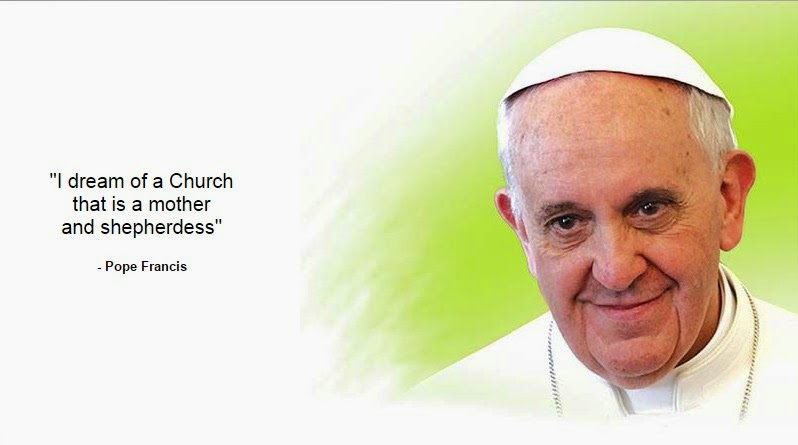
The 50th anniversary of the Second Vatican Council instils a new hope in us with Pope Francis exclaiming ‘Oh, how I would like a poor Church and for the poor’.

More info:

http://www.cyours.com/cci/index.html

Online Registration:

http://www.cyours.com/cci/registration.aspx

Cardijn ‘a wonderful listener’

Helen Jagoe (Photo: Catholic Weekly)

Cardijn Joseph Cardijn “was a wonderful listener” who “very seldom spoke”, according to former IYCW Secretary-General Helen Jagoe.

He “never, ever lost his interest in young people” from the time he founded the Young Christian Workers (YCW) to his death in 1967, Helen Jagoe, from Bathurst Australia told the Catholic Weekly.

She joined her local YCW at 18 and quickly rose through its ranks to become national secretary in Melbourne and later general secretary of the movement’s international secretariat in Brussels.

It was there she worked closely Cardinal Cardijn, then in his twilight years but still a “gentle, happy man” and devoted champion of the spiritual well-being of young workers.

“At the very beginning he used to stand outside the factory gates, and he’d see these kids walking out,” she says. The priest had watched children disappear from his congregation as soon as they were old enough to work.

He became concerned as he saw them exit factories, their faces aged with grime and fatigue, and their faith threatened by the crass secularism of industrial culture. “They were lost immediately when they went into the workplace,” Helen says.

To counteract the dehumanising nature of the workplace, he created the See, Judge, Act method, which called on young people to look at the world around them and understand it in the light of the Gospel, then to act accordingly to improve the situation.

He spent hours with young people asking them about their working conditions and job satisfaction, and relayed those messages to bishops around the world and members of the curia.

Unconcerned about Mass attendance or membership of religious societies, he challenged young people to be “apostles in the workplace”.

At its peak the YCW was active in 90 countries, including Australia, where it offered a range of services from employment support and language classes to sporting competitions.

In 1965 Cardinal Cardijn travelled to Australia on a visit that was meaningful not just for YCW members in Australia but also “for the Church”, Helen says.

No less a figure than Pope Paul VI earlier paid tribute to him at the closing of the Second Vatican Council when he noted “the good seed planted 50 years by several generous pioneers and particularly a young Belgian priest had truly yielded a hundredfold”.

Cardinal Cardijn’s death just two years later was a great shock for all his supporters, including Helen who was then based in Brussels.

“He was planning a trip to South America when he died. He had a bit of a cold and got the flu, he was in bed, then all of a sudden we heard he’d died of pneumonia.”

Helen was one of five YCW leaders in Brussels entrusted with planning the funeral.

At the time of his death Cardinal Cardijn was internationally recognised for his work with the YCW, and supporters from around the world attended the requiem Mass at the Basilica of the Sacred Heart in the Brussels suburb of Koekelberg.

Though his death at 84 was a shock, “we didn’t miss him, because we knew his legacy so well”, Helen says.

“He was never there as a leader, he was always in the background.

“We went on living his message.”

Almost 50 years later, the movement still exists in Australia, but Helen believes a reform is needed to better appeal to the “frenetic lifestyle” of young people today.

“They never seem to stop to reflect because life doesn’t allow them to,” she says.

“It needs to be re-founded by young people for young people with young people, using the method but perhaps not the name – people today don’t recognise themselves as workers.”

Helen is hopeful the first step towards the canonisation of Cardinal Cardijn will trigger “a renewed interest in what he did – not the man but in his method”.

SOURCE

Sainthood process starts for cardinal of the workers (Catholic Weekly)

Aus bishop recalls Cardijn role at Vatican II

Bishop Pat Power with Devett O’Brien

Bishop Pat Power, recently retired auxiliary of Canberra-Goulburn archdiocese, has recalled “the influence on Vatican II of Joseph Cardijn”.

Writing in CathNews, Bishop Power was recounting his experience in Rome for the celebration of the 50th anniversary of the opening the Second Vatican Council.

“A week earlier, I had prayed at the tomb of Pope John XXIII in St Peter’s Basilica and was moved to tears as I contemplated the great contribution he and the Second Vatican Council had made to the life of the Church and its impact on the contemporary world,” Bishop Power wrote.

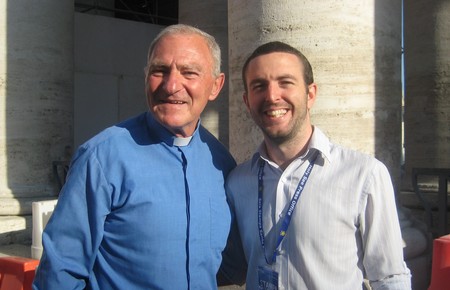
“Prior to the Mass, I had a chance meeting with Australian, Devett O’Brien, Secretary General of the International Young Christian Students movement.

“That meeting reminded me of the influence on Vatican II of Joseph Cardijn, founder of the Young Christian Workers. The YCW method of See, Judge and Act is very much in harmony with John XXIII’s call for us all to “read the signs of the times”.

“As I left Rome, I felt privileged to have experienced an historic moment of grace on 11 October 2012 and I had hope in my heart for a new flowering of Vatican II which would more clearly enable the Church to show its best self in witnessing to the love of God and showing the face of Jesus to a world hungering for meaning,” Bishop Power concluded.

SOURCE

Bishop Pat Power’s historic moment of grace (CathBlog)

A ‘New Pentecost’ in the 50th yr of opening of Vatican II

The International Team of CCI wishes all Cardijn alumni and the members of Cardijn Community a spirit filled ‘New Pentecost’.


New Pentecost is very special to CCI.

New Pentecost was promoted by CCI as a follow up to its successful Conference on Vatican II + 40 in 2002 in Bangkok to commemorate the 40thanniversary of the opening of Vatican II in 1962.

Pope John XXIII proposed the prayer “O Holy Spirit, renew your wonders in this our day, as by a new Pentecost” for Vatican II. He wished the Vatican II to open the way to a New Pentecost in the Church.

This year CCI is commemorating the 50th anniversary of the opening of Vatican II by launching a 3 year project re-examining the spirit and decisions of the Council in the areas of social teachings and lay participation in the light of Cardinal Cardijn’s contribution.


The project will be launched on the 11th October this year in Manila with a 3 day Conference on ‘Vatican 2 + 50: A Cardijn Perspective’.

An ‘Inquiry’ to collate the perceptions of the laity will be launched as a preparation to the Conference.

On this special day, we beseech the Holy Spirit to guide us in our search to build a ‘sustainable Church’ in the light of the vision and spirituality promoted by Cardijn.

From Easter to New Pentecost

Cardijn with Patrick Keegan at Vatican II

Easter greetings to all CCI members and friends.

There is so much to celebrate this year, beginning with the centenary of Cardijn beginning work in the parish of Our Lady of Laeken.

This year also marks the centenary of the foundation of the first YCW group, an event celebrated by the IYCW.

And it also the 50th anniversary of the opening of the Second Vatican Council at which Cardijn played such an important yet largely hidden role.

CCI will commemorate this important event by launching a three year program to study Cardijn’s role at the Council and the Church’s social commitment to lay apostolate.

We will hold an opening conference on the theme “Vatican 2+ 50: A Cardijn Perspective”  from 11-14 October 2012 to be held at the Pius XII Center in Manila, Philippines.

Join us for this important event.

Remembering Cardijn’s role at Vatican II

“’Vatican II canonised Cardijn,’ I remember late Melbourne Archbishop Frank Little saying as he regaled us with his story of meeting the YCW founder while studying in Rome,” writes Stefan Gigacz.

“What’s more there was a whole generation of Australian bishops and priests, who told similar stories, starting with his predecessor Archbishop Justin Simonds, and including Brisbane Archbishop Frank Rush, Adelaide’s James Gleeson, Perth’s Redmond Prindiville and many others.

“Archbishop Little’s message stayed with me, and was later reinforced by a biography of Cardijn by his co-workers, Marguerite Fievez and Jacques Meert, that detailed his role at the Council in promoting the specific task of the laity as the building up of the world.

“So in 1995, when I began doing research on the origins of the International Young Christian Workers movement, I looked forward to the publication of the first volume of a major History of Vatican II.

“But after forking out over $100 for Volume I, I reached for the index – only to be deflated to find not a single mention of Cardijn.”

Read the full article here:

The saint at Vatican II (CathNews)

CCI is this year launching its 50th anniversary of Vatican II program with a conference “Vatican 2 + 50: A Cardijn Perspective” to be held in Manila, Philippines from 11-14 October 2012.

Click here for details: www.vatican2plus50.com